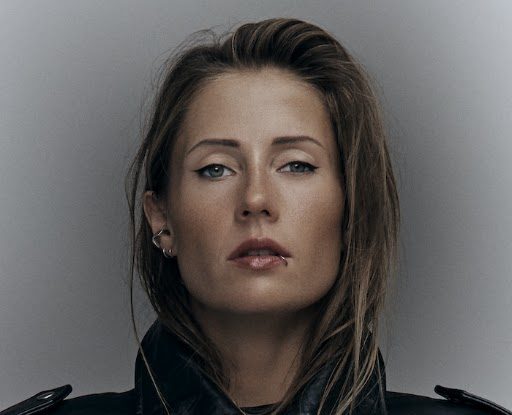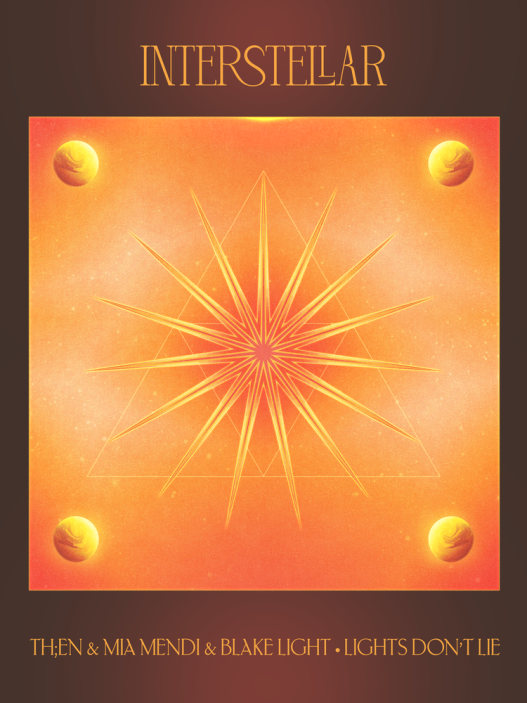






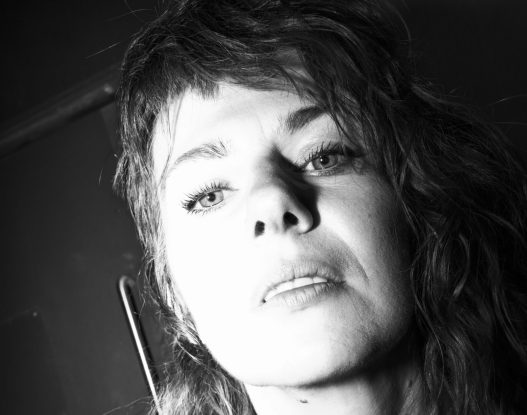
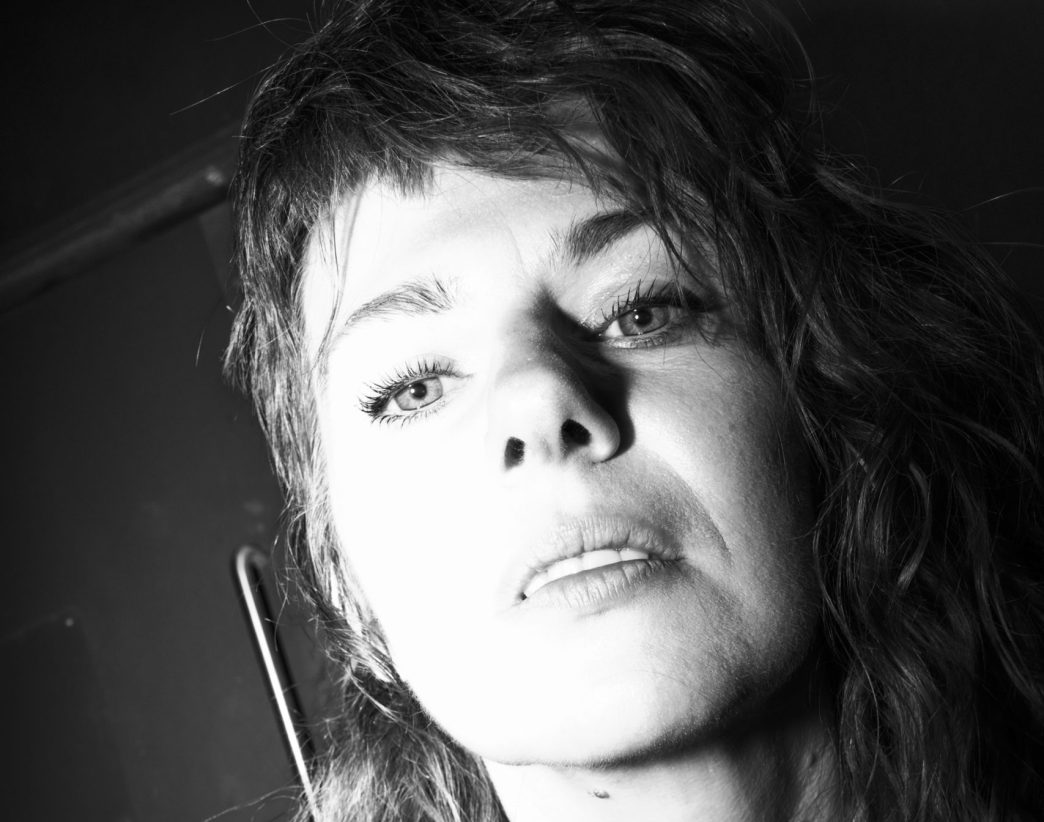
ona:v is an Edinburgh-based artist known for playing high-quality techno. She runs the EPiKA collective and curates their club night, and has a strong presence in the Scottish techno scene. Over the years, she has shown a strong commitment to creating welcoming spaces for marginalized communities, both through EPiKA and as a member of the Sisu collective. As a DJ, she has supported techno titans including Ben Klock, Slam, and ANNĒ, with gigs and festivals across the UK and Europe. Her latest track, ‘AT2’, appears on Sampler: Part Three and shows her focus on the truly loopy, repetitive, yet deep techno.
In this interview, we talk with ona:v about her journey, her impact on the community, and what’s next for her.
How did you first fall in love with techno and decide to start producing your own music?
Actually, there’s a big gap between me falling in love with techno and me starting to produce. I discovered techno almost accidentally. It was many years ago – I won a ticket to a club night through a student radio station back in my home city, Poznań. I went there and the music was completely unfamiliar to me, but it somehow enticed me. I kept returning again and again. The club was Eskulap in Poznań – it doesn’t exist anymore, hasn’t for many years.
I became a bedroom DJ for many years after that, with little to no ambition to leave my bedroom and DJ in the wild, and then finally started producing around 2020. I signed up to a course run by DJ Rebekah – a 10-day challenge where you had to produce 10 tracks (the 10×10 Production Challenge). Day one, I had absolutely no clue what I was doing. By day 10, I was… not that bad. And that’s how it all started.
What is it about the Edinburgh and Scottish techno scene that keeps you so deeply involved day-to-day?
Well, I live here – so that’s the practical answer! But what keeps me invested is actually the challenge. There isn’t a lot of this type of European techno that gets regularly played in Edinburgh, but the audience is incredible. There was a gap in the scene – even now we have so few local female DJs playing like that – and filling that gap with EPiKA and bringing those darker, more textural sounds to the city – that’s what keeps me engaged.
How did the vision for your femme-focused club event, EPiKA first come together?
EPiKA is actually a collective, and we run two different club nights – EPiKA and EPiKA SOFT. The first focuses on darker European-style techno, and the second on electro, house, disco, acid – more gentle yet very danceable electronica.
It all started in 2019. Our first event was actually supposed to happen on 4th April 2020 – right when the pandemic hit. The whole thing really came from the fact that nobody would book me! I thought I was a good techno DJ, and yet there was nobody interested in that sound – not played by me, anyway. And I realized there must be other people like me. So I wanted to carve out a little bit of space for people like me and genres that I like. Because of the pandemic, we only actually started in August 2021. EPiKA will turn 5 this August, and we’re planning celebrations. 
What does the Sisu collective mean to you and why being involved in it is so important?
Being involved in Sisu is continuously very important to me. It’s an amazing grassroots organization that amplifies and grows FLINTA voices in the scene. I’m really happy to have been on the internal team for years now, and I’m looking forward to all the amazing things we’ll achieve together. The team has recently changed a lot, and I can see a lot of new energy amongst us – exciting!
Does your unusual background – you are originally Polish, you are a scientist both by training and at your ‘day job’ – influence your style of playing or producing?
Honestly, I don’t know if there’s a direct influence. I guess being Polish means I experienced a lot of the European clubbing scene firsthand, both Polish and German (but they are very similar), and that’s what I’m missing here. I think I play the way I remember DJs would play to me when I was 20-something – that’s the feeling I’m trying to recreate.
For production, I just really love very repetitive music. It’s not Poland-specific, but perhaps it’s more popular there. In terms of being a scientist – I suspect I’m a bit more organized than the average DJ/producer, but I don’t think it actually impacts the way I play or produce.
What’s the wildest or most unforgettable moment you’ve had sharing a stage with artists like Slam, Dave Clarke or ANNĒ?
I’d actually challenge this question a bit. When you’re supporting someone famous, the people on the dance floor didn’t come to see you – they came for the big name playing after you. They don’t care about you that much, or the music you play. So the unforgettable moments of real connection with the audience usually don’t happen there.
For me, they happen at small local club nights where people actually come to see you. I have several beautiful memories from EPiKA nights where – when I’m opening and people show up at 11:30 – I know that everybody on the dance floor came specifically to listen to what I have to play for them. Those are my best DJ moments. Either at EPiKA, or at other small local nights in clubs. In such situations, there’s absolutely no pressure to DJ in a particular way or play a particular genre. You can just play with complete freedom, and that’s when the magic happens.
What sparked the idea for your latest track ‘AT2’ on ‘Sampler: Part Three’?
For a long time, I felt somewhat guilty as a producer because nothing really “sparks” any ideas for me, you know? I usually just have some time and jam on Ableton with the plugins I have or with Push. Then something sounds good, and I build around it. Something else sounds good, and I keep building.
I no longer feel guilty – I watched a lot of producers talking about their workflows, and it turns out this is a semi-universal – if not completely universal – workflow for music production. Jam, jam some more. So yeah, I was just playing with my gear until it sounded good. That’s it.
The one thing I can say about the track is its name. ‘AT2’ is the second track of three that were made in Sicily, in the town called Acitrezza. I’ve already released ‘AT1’ and ‘AT3’. So I have memories associated with this track, but the actual making of it was just… random music-making, I’m afraid.
‘AT2’ has received a lot of positive feedback. What are your plans for your next release? Sonically, how will it differ from ‘AT2’?
I’m just planning to keep producing and see what comes out. I don’t really stick to genres that much – I just make music until something feels right. So I couldn’t tell you exactly how the next release will differ from ‘AT2’, but it’ll be whatever I’m feeling at the time. I am hoping to have a bit more time for production starting this summer, and I am hoping to eventually put an album together from the massive number of unreleased stuff that has been incubating on my hard drive!
Now that ‘Sampler: Part Three’ has been released, what’s next for you?
More DJing, more producing. From a DJing perspective, I am hoping to become a bit more visible South of the Scottish border – I feel there are more nights where my sound truly belongs. For producing – I hope to really carve out some production time! As a promoter, EPiKA is turning 5 this August, so we’re planning big celebrations for that – it’s a big milestone for the collective. Beyond that, I’m just going to keep making music and playing the sets I want to play 🙂
If you could teleport to any dream gig, festival or venue right now, where would it be and why?
If I could teleport to any dream gig, I’d probably not teleport – I’d time travel. Maybe one of the Love Parades in the late 1990s or something like that. I feel there was much more focus on music in the music industry back then, and less focus on being cool, I guess. I think I’d want to DJ at a Love Parade, on one of those little trucks. Yeah. Or just dance – I wouldn’t even need to DJ.
Stream ‘AT2‘:
Follow ona:v
Soundcloud – Instagram